
Ultimate Guide to Demolition Service Equipment and Tools
Learn about the key products that enhance demolition efficiency, safety, and project success across various job sizes.
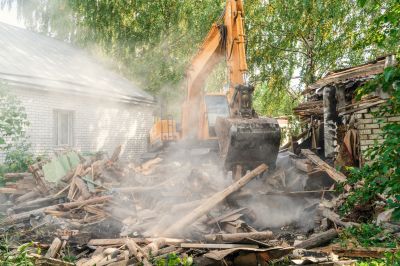 Demolition services in Winston Salem, NC, require a diverse array of equipment and tools to effectively and safely carry out various projects. From small-scale interior demolitions to large structural tear-downs, selecting the right products is essential for efficiency and safety. Heavy machinery such as excavators equipped with hydraulic breakers can handle substantial concrete and masonry removal, while handheld tools like demolition hammers and pry bars are ideal for more detailed work. Safety gear, including protective helmets, gloves, and respirators, also plays a critical role in ensuring worker safety during demolition activities.
Top Overall Option
Heavy-Duty Hydraulic Demolition Excavator
A hydraulic demolition excavator equipped with multiple attachments offers versatility for a wide range of demolition tasks. Its ability to handle heavy materials, break concrete, and perform precise demolition makes it a valuable asset on any job site. Designed for durability and ease of operation, this equipment can adapt to various project sizes and complexities, providing a reliable solution for professional demolition contractors in Winston Salem, NC.
Types of Products For Demolition Service
Hydraulic Breakers
Powerful attachments used to break concrete, asphalt, and other hard materials efficiently.
Demolition Hammers
Handheld tools ideal for breaking up concrete, masonry, and tiles in smaller or detailed demolition tasks.
Pry Bars and Crowbars
Leverage tools essential for prying apart structures and removing fixtures.
Reciprocating Saws
Versatile saws suitable for cutting through wood, metal, and plastic debris during demolition.
Concrete Saws
Heavy-duty saws designed for cutting through concrete and masonry with precision.
Dust Control Equipment
Industrial vacuums and water spray systems to manage debris and minimize dust during demolition.
Debris Chutes
Equipment that safely directs debris from upper levels to ground containers for disposal.
Dumpsters and Roll-Off Containers
Large containers for collecting and transporting demolition debris on-site.
Safety Gear
Protective helmets, gloves, goggles, and respirators essential for worker safety.
Excavators with Hydraulic Attachments
Heavy machinery equipped with various tools for large-scale demolition projects.
Skid Steer Loaders
Compact equipment capable of handling debris removal and site clearing tasks.
Wrecking Balls
Traditional heavy tools used for bringing down large structures when appropriate.
Hydraulic Cutters
Attachments for cutting through steel and reinforced concrete.
Jackhammers
Portable pneumatic tools for breaking up concrete and stone.
Vibratory Plate Compactors
Tools used for preparing surfaces after debris removal or for foundation work.
Portable Generators
Power sources to operate tools and equipment in remote or site-limited areas.
Popular Choices
Widely used for their portability and ease of use in various demolition scenarios.
Commonly selected for their efficiency in breaking concrete and asphalt on larger projects.
Trending for maintaining cleaner work environments during demolition activities.
Popular for managing debris on commercial and industrial sites.
Effective for dust control, especially in confined or sensitive areas.
Favored for their maneuverability in tight spaces and smaller-scale demolitions.
Increasingly used to enhance safety during high-elevation demolition tasks.
Popular for their versatility and ease of handling in various demolition jobs.
High-demand accessories for saws used in precise concrete demolition.
Commonly used to secure demolition zones and ensure safety compliance.
Essential for powering tools in locations without immediate electrical access.
Popular attachments for cutting and sorting scrap metal during demolition.
Trending for their ability to efficiently manage dust and debris.
Still utilized in certain large-scale demolitions for their effectiveness.
Widely used for their power and portability in various demolition contexts.
Increasingly important for working safely in low-light conditions.
Popular for organizing debris and maintaining site cleanliness.
For projects involving the removal of walls, flooring, or fixtures, specialized tools can streamline the process and reduce labor time. Dust control equipment such as industrial vacuums and water spray systems help manage debris and maintain a cleaner work environment. Additionally, waste disposal solutions like dumpsters and debris chutes facilitate the proper handling and disposal of demolition debris, aligning with local regulations.
Whether working on residential, commercial, or industrial sites, having a comprehensive set of demolition tools and equipment can significantly impact project outcomes. Proper planning, combined with the right product selection, ensures that demolition tasks are completed safely, efficiently, and with minimal disruption to surrounding areas. In Winston Salem, NC, many suppliers offer a wide range of these products, catering to both professional contractors and DIY enthusiasts engaged in demolition projects.
Key Buying Considerations
- Type of demolition project and scope to determine appropriate equipment size and power.
- Material types involved, such as concrete, steel, or wood, influencing tool selection.
- Power source availability, whether electric, pneumatic, or hydraulic, affecting portability and usage.
- Safety features and certifications to ensure compliance and worker protection.
- Ease of operation and maintenance requirements for long-term durability.
- Site conditions, including space constraints and access limitations.
- Dust and debris management capabilities to maintain a safe work environment.
- Budget constraints balanced with the durability and efficiency of the equipment.
- Compatibility of attachments and accessories with existing machinery.
- Availability of replacement parts and technical support in Winston Salem, NC.
- Environmental considerations, such as noise levels and dust suppression needs.
- Training requirements for operators to maximize safety and productivity.
- Regulatory compliance with local demolition and waste disposal laws.
- Versatility of equipment to handle multiple tasks within a project.
- Weight and transportation logistics, especially for remote or confined sites.